
climate crisis & militarism
Exploring the connection between war, military systems, pollution, and environmental justice.
The climate crisis is not only driven by fossil fuels and industry. Military operations, weapons production, war, and global military infrastructure also contribute heavily to pollution, greenhouse gas emissions, environmental destruction, and public health harms. Yet these impacts are often left out of climate conversations.
Earth’s Greatest Enemy
Earth’s Greatest Enemy is a documentary by journalist and filmmaker Abby Martin that examines the environmental impact of the U.S. military and its role in the climate crisis.
The film argues that the U.S. military is the world’s largest institutional polluter, contributing to greenhouse gas emissions, water contamination, toxic waste, ecosystem destruction, and long-term environmental harm around the globe. The documentary combines investigative journalism, interviews, frontline reporting, and stories from impacted communities to explore the hidden environmental costs of militarism and war.
The documentary also explores how military systems protect fossil fuel infrastructure, consume enormous resources, and redirect public funding away from climate solutions and human needs.
let’s Explore these Issues
the military and climate change
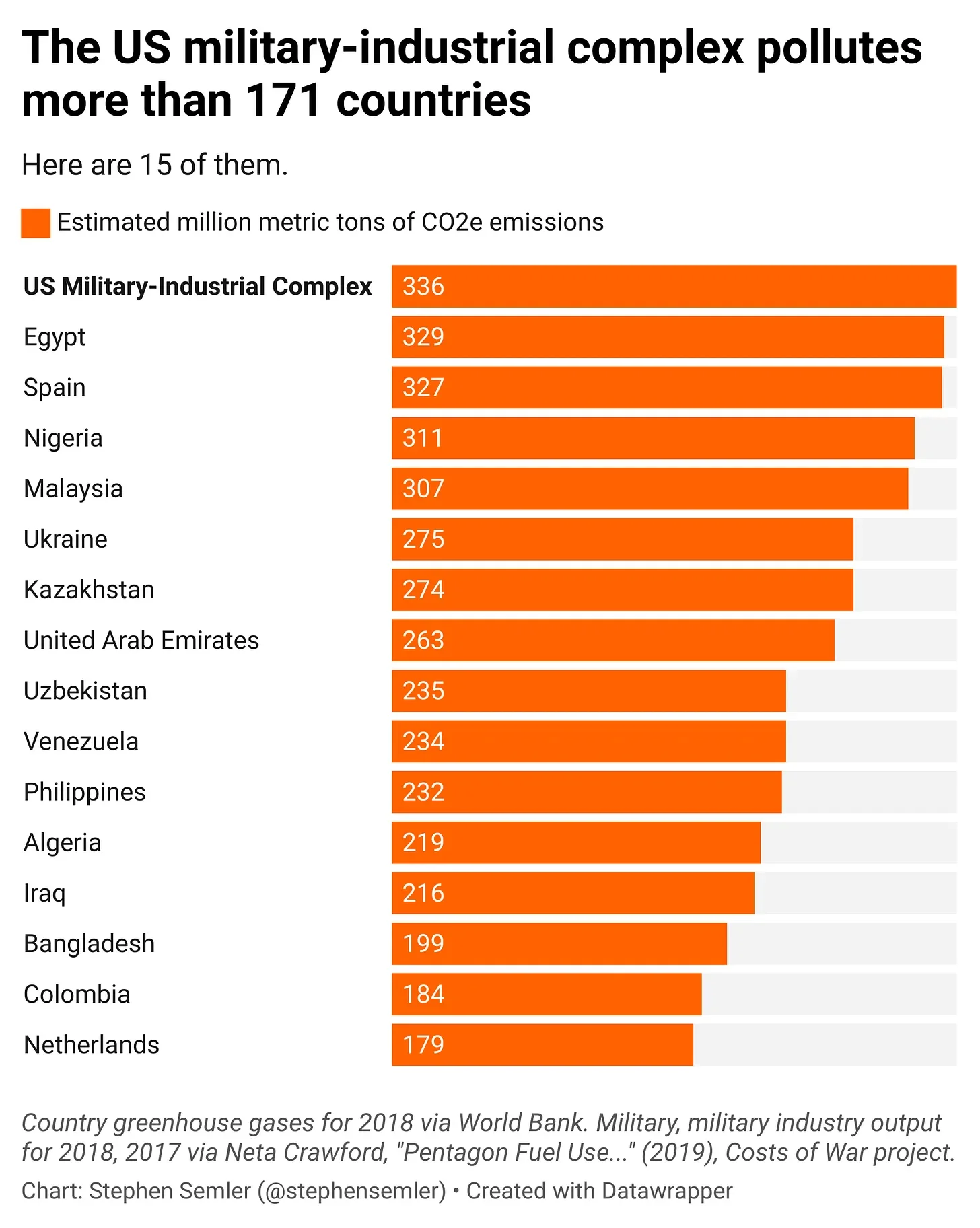
The U.S. military is one of the world’s largest institutional contributors to greenhouse gas emissions.
Military aircraft, ships, vehicles, overseas bases, weapons production, and war-related destruction all contribute to pollution and environmental damage.
Despite this, military emissions are often minimized or excluded from public climate discussions.
Military activity affects: air quality, water systems, ecosystems, public health, climate stability, surrounding communities
The environmental impacts of war can continue for decades after conflicts officially end.
QUICK FACTS:
The U.S. military operates hundreds of overseas bases.
Military aircraft consume massive amounts of jet fuel.
War damages land, water systems, and infrastructure.
Military pollution affects both civilians and veterans.
Environmental Costs of War
War and militarism create environmental damage that can last generations.
Communities around the world continue dealing with toxic exposure, contaminated water, damaged ecosystems, and long-term public health effects.
KEY POINTS:
Millions affected in Vietnam
Long-term environmental contamination
Health impacts continue across generations
Veterans and civilians both affected
Agent Orange
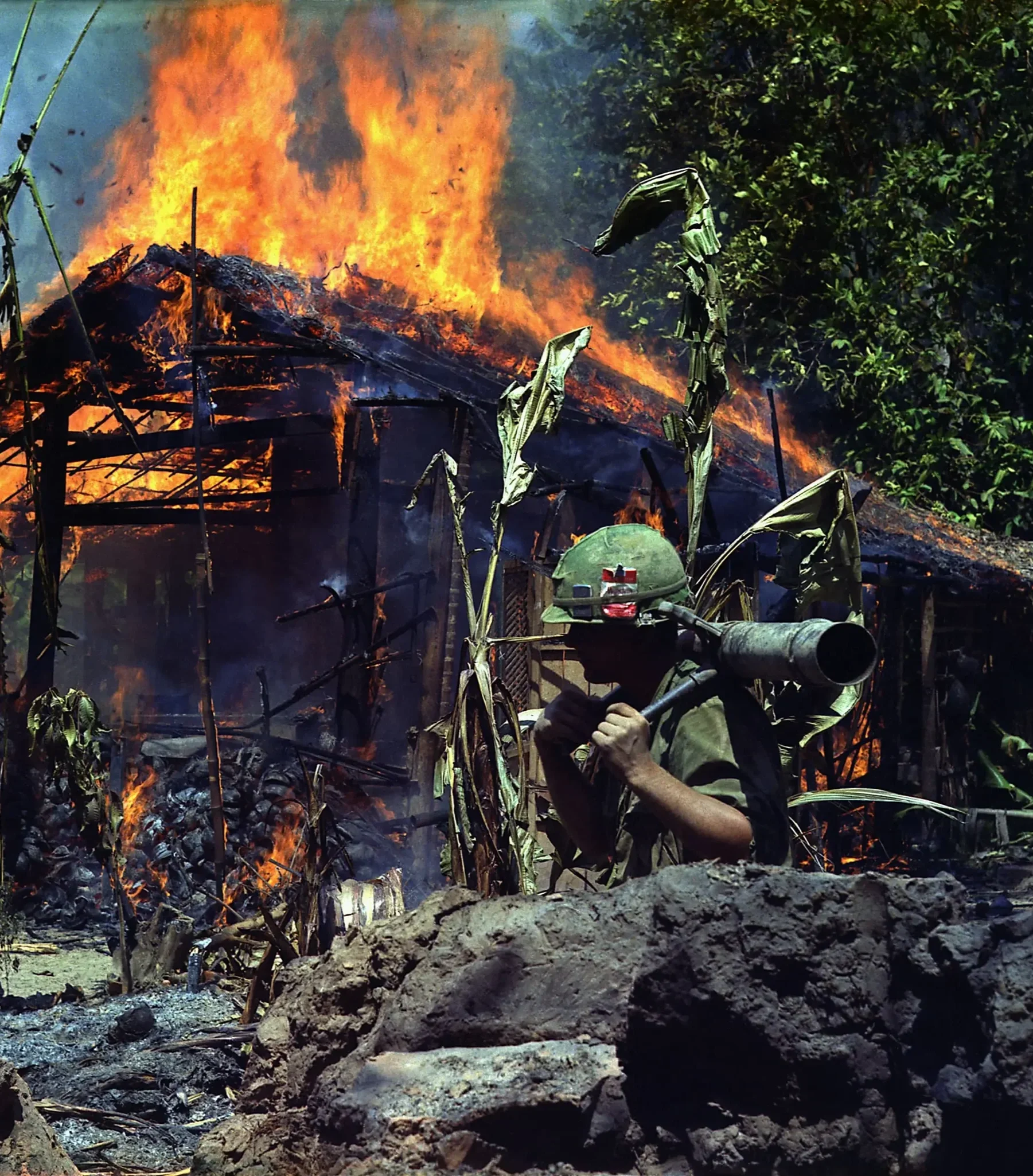
During the Vietnam War, the U.S. military used herbicides collectively known as Agent Orange to destroy forest cover and crops.
The chemicals caused widespread environmental destruction and continue to impact millions of people through cancers, birth defects, and long-term health conditions decades later.
Burn Pits
Burn pits were used by the military to dispose of trash, chemicals, plastics, fuel, and other waste through open-air burning.
The smoke exposed both service members and civilians to toxic chemicals linked to respiratory illness, cancers, and other long-term health problems
Many veterans continue fighting for recognition and healthcare connected to burn pit exposure.
KEY POINTS:
Toxic smoke exposure
Long-term health effects
Civilians also impacted
Ongoing veteran advocacy
PFAS are industrial chemicals often called “forever chemicals” because they persist in the environment for extremely long periods of time.
Military firefighting foam has contaminated water systems near military bases and airports across the country.
Communities dealing with PFAS contamination often face years of health concerns, cleanup struggles, and political battles for accountability.
KEY POINTS:
PFAS can contaminate groundwater
Linked to long-term health concerns
Found near many military sites
Cleanup efforts can take decades
PFAS & Water Contamination
Radioactive Waste
Nuclear weapons production has created enormous amounts of radioactive waste.
Storage, transportation, and cleanup of radioactive materials continue to raise environmental and public health concerns across the United States and around the world.
Many affected areas will require monitoring and cleanup efforts for generations.
KEY POINTS:
Massive radioactive waste production
Long-term environmental risks
Water contamination concerns
Ongoing cleanup challenges
Air Shows &
Climate Pollution
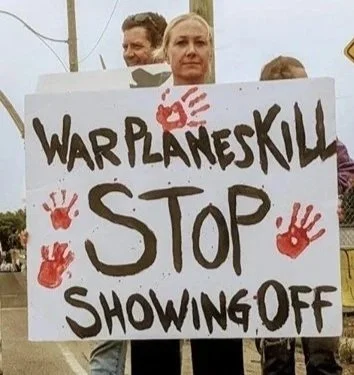
Military air shows are often presented as entertainment and patriotism, but they also promote militarism while consuming enormous amounts of fuel.
A single military jet demonstration can burn thousands of gallons of jet fuel in a short period of time.
Critics argue that air shows normalize military power while hiding the environmental and financial costs behind spectacle and entertainment.
KEY POINTS:
Large fuel consumption
Air pollution and emissions
Noise pollution
Public funding concerns
Militarism presented
as entertainment
Air shows can be fun, but the environmental cost is rarely discussed.
Environmental Justice
Communities near military bases, industrial zones, polluted waterways, and testing sites are often forced to live with contaminated air, unsafe water, toxic exposure, and long-term environmental burden.
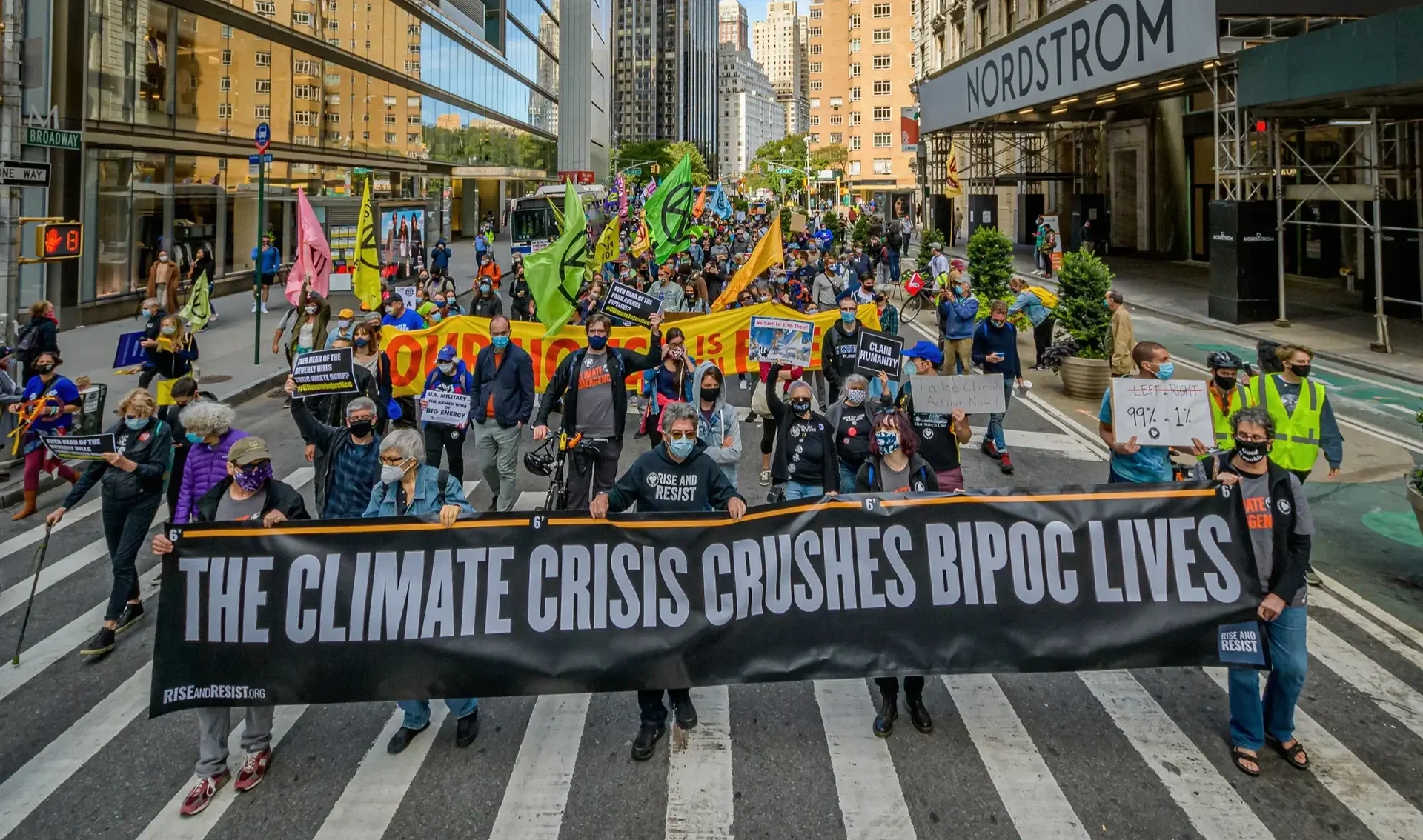
Poor and working-class communities are frequently impacted the most, especially Black, Indigenous, immigrant, and other communities of color that have historically faced environmental racism, displacement, underinvestment, and unequal protection from pollution.
Climate justice, racial justice, and environmental justice are deeply connected. Many activists argue that solutions to the climate crisis must also address inequality, public health, housing, access to resources, and the systems that place environmental harm disproportionately on marginalized communities.
Environmental justice means no community should be treated as disposable.
KEY POINTS:
Unequal environmental burden
Environmental racism affects many communities of color
Communities living near contamination often face long-term health impacts
Climate justice and racial justice are interconnected
Pollution and environmental harm are tied to broader systems of inequality
What Else Could We Fund?
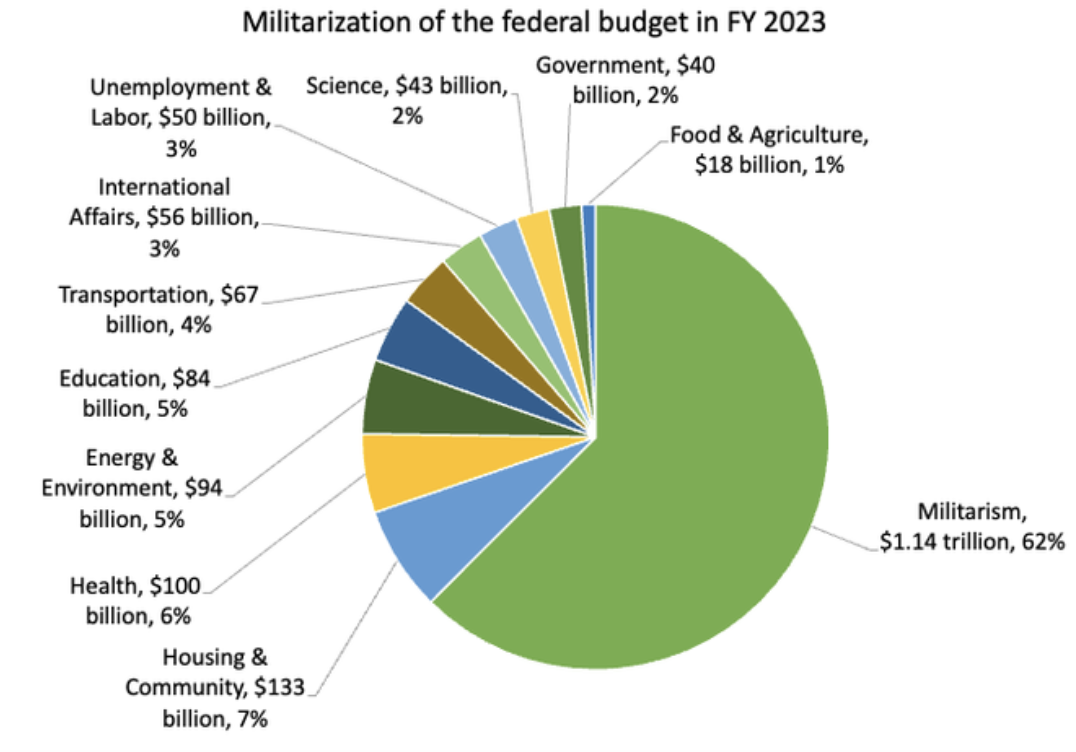
Military spending affects more than defense budgets.
Money spent on war, weapons systems, and military expansion is money not spent on healthcare, renewable energy, public education, housing, clean water, infrastructure, disaster response, and climate solutions.
Many people ask whether public resources could be used in ways that better support human and environmental wellbeing.
KEY POINTS:
Opportunity cost matters
Public resources reflect priorities
Climate solutions require investment
Communities need infrastructure and support
Take Action
Education, awareness, and public engagement are important parts of addressing the connection between climate crisis and militarism.
Veterans, activists, educators, students, and community members continue organizing conversations, presentations, protests, and educational events focused on environmental justice and peace.
CONTACT US FOR HELP WITH PRESENTATIONS, RESOURCES, AND MATERIALS.
ACTION IDEAS:
Share educational resources
Host a presentation or discussion
Attend community events
Support environmental justice efforts
Learn more about military pollution
Connect with local organizations